 PEGASUS Tourism


Travel from Tottori to Shimane over two days, exploring sand dunes, ancient shrines, Mount Daisen, and seaside hot springs. This journey offers a rich experience of the San’in Coast’s natural landscapes and cultural heritage, blending myth, nature, and relaxing onsen scenery into a memorable and romantic escape.
Tour Details
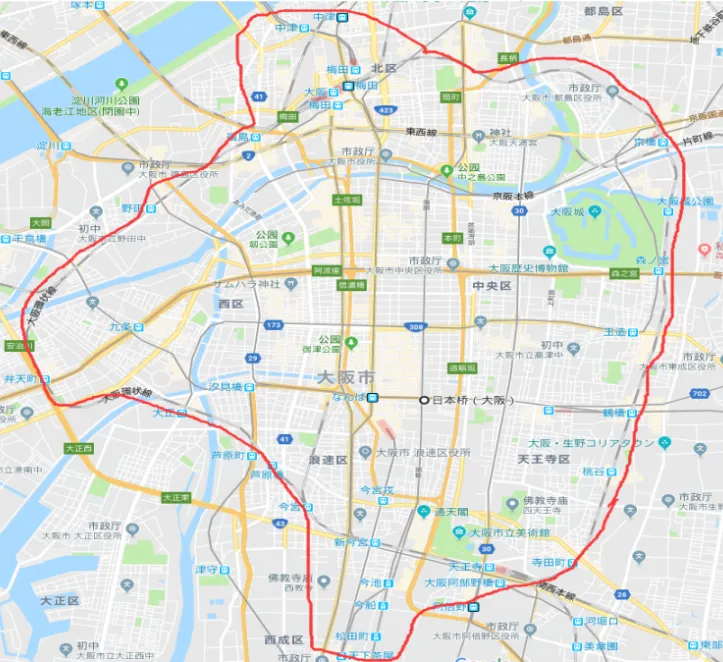
7:00–7:30 pickup within Osaka (along the Loop Line) or meet at the designated location.
Exact pickup time will be confirmed by staff based on the day’s schedule.
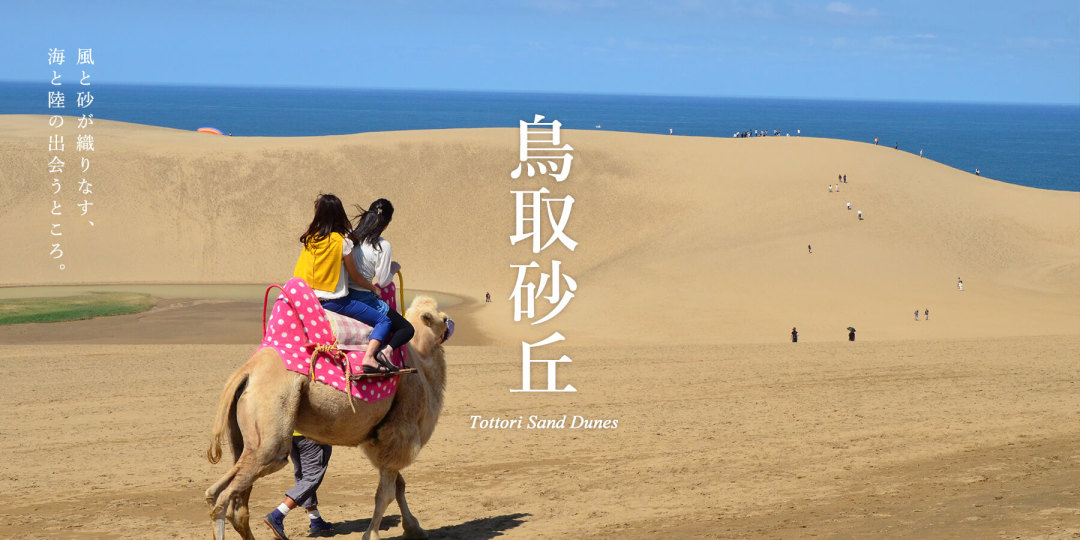
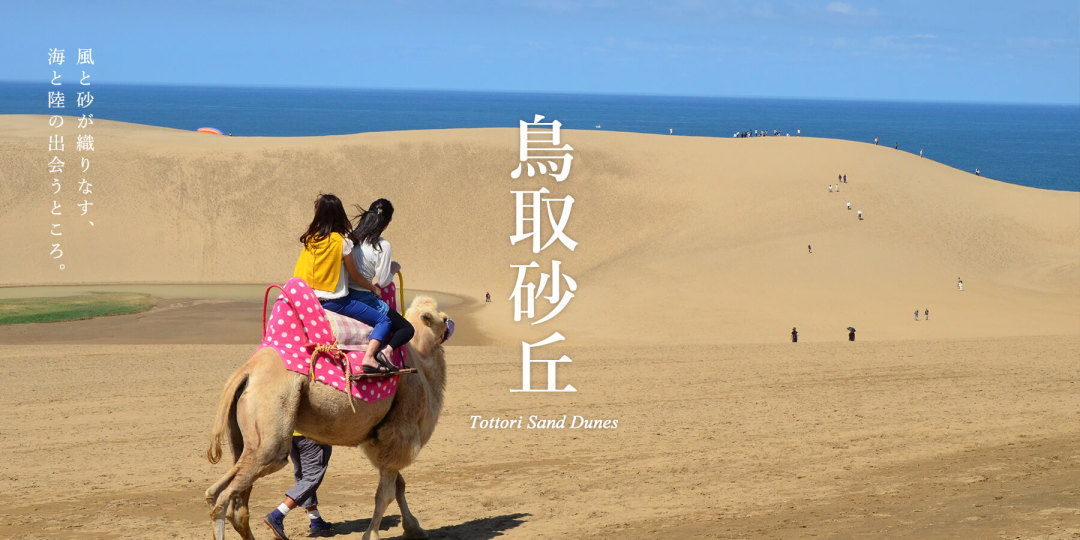
Optional Activities:Camel riding.Sandboarding
※Walking can be difficult and sand easily gets into shoes. Beach sandals are recommended.

Located on the Sea of Japan side of Tottori City in Tottori Prefecture, the Tottori Sand Dunes stretch 16 km from east to west and up to 2.4 km from north to south, making them the largest dunes in Japan. Formed over thousands of years as ocean currents and winds carried sand and sediment to the shore, the dunes create a landscape that is constantly changing.
Their greatest appeal lies in this ever-shifting scenery and the natural beauty shaped by wind and sand, which forms patterns and contours that transform throughout the day.
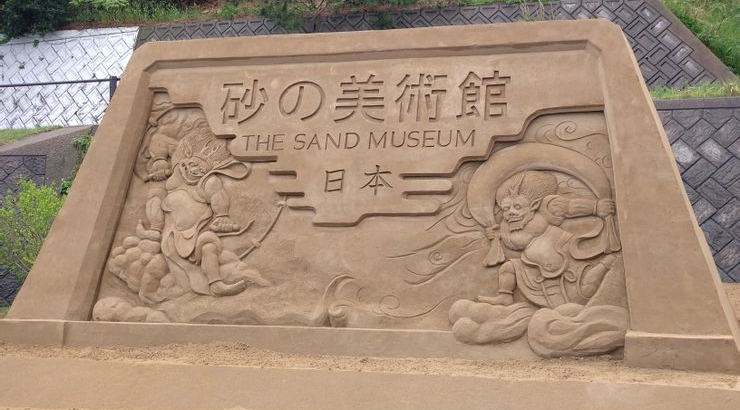
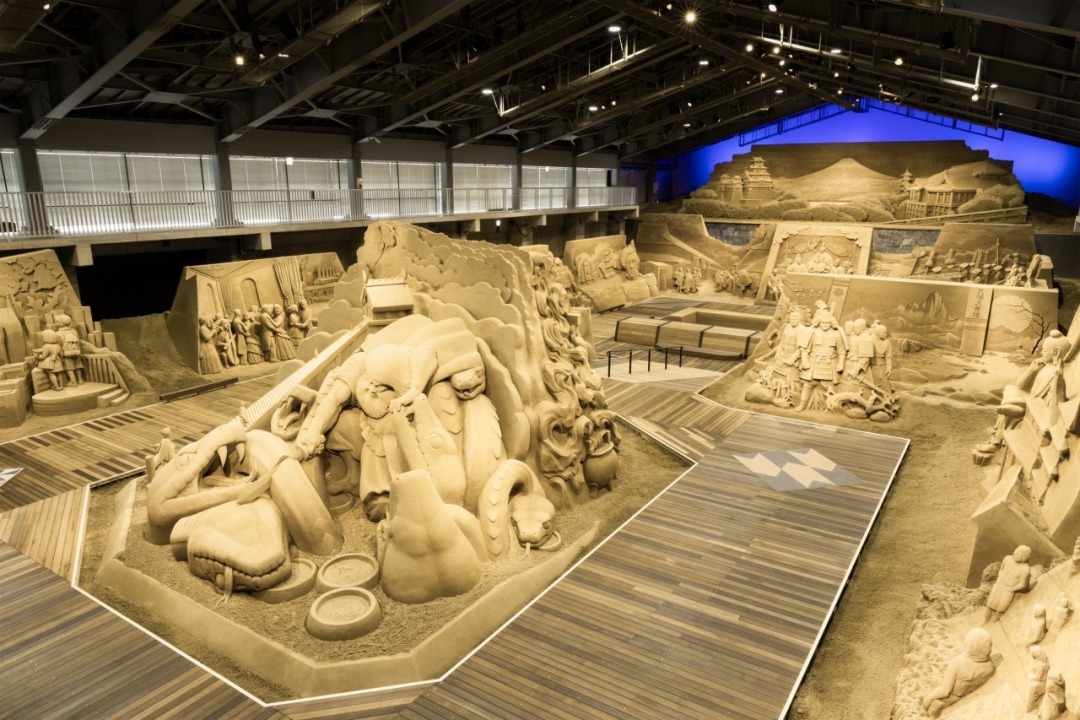
(16th Exhibition) Theme: “Travel Japan Through Sand”
This exhibition will showcase iconic Japanese sights—such as Mount Fuji and Kyoto—through intricate sand sculptures. It will also feature temple architecture, ukiyo-e art, and classic historical scenes, allowing visitors to immerse themselves in the many facets of Japanese culture.
The pieces trace Japan’s history from ancient mythology all the way to the Edo period and the present day, showing each era’s culture through sand sculptures. You’ll also find World Heritage sites like Mount Fuji and Himeji Castle, recreated in sand to show both their delicate details and their impressive grandeur.
Sand artworks portray Japanese history from mythological times through the Edo period to the modern era.
World Heritage sites like Mt. Fuji and Himeji Castle are delicately recreated using only sand and water—no adhesives or preservatives.
After each exhibition, the sculptures are dismantled and the sand is reused.
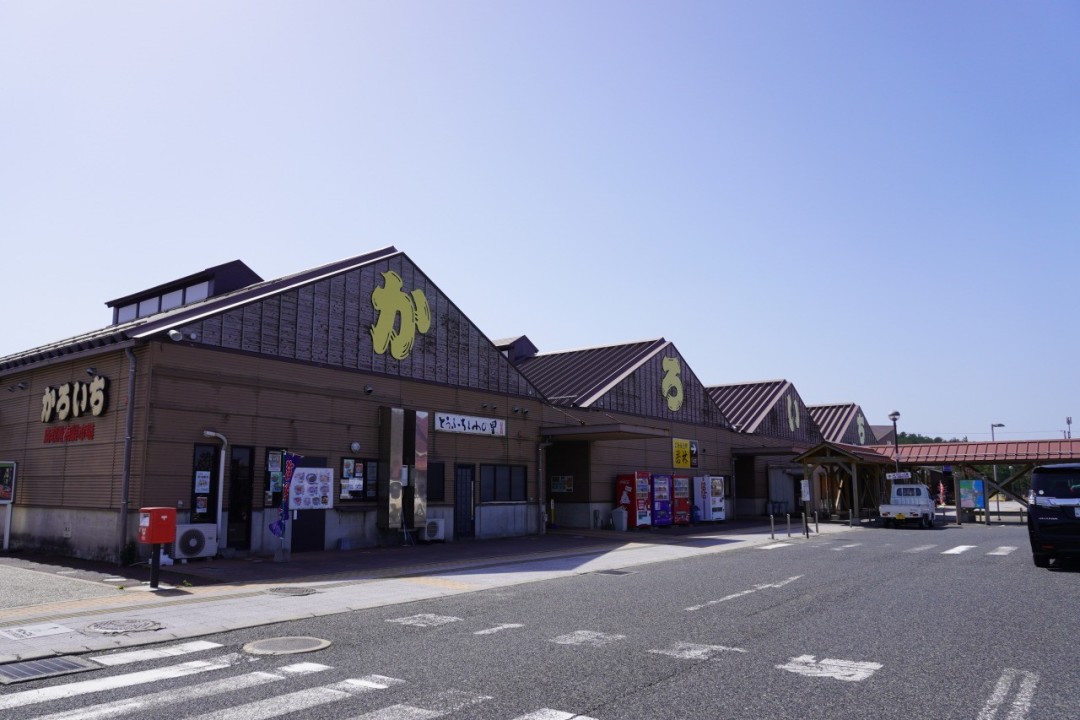
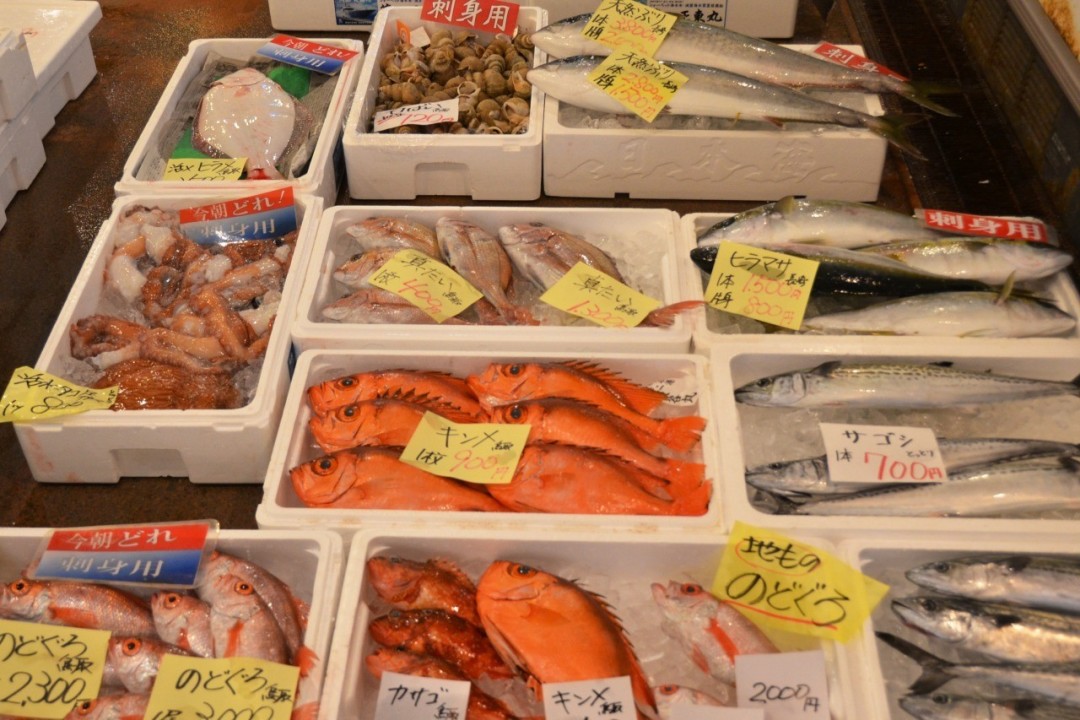
Located next to Karo Port, this fishermen’s cooperative market serves as the “kitchen of Tottori City.”
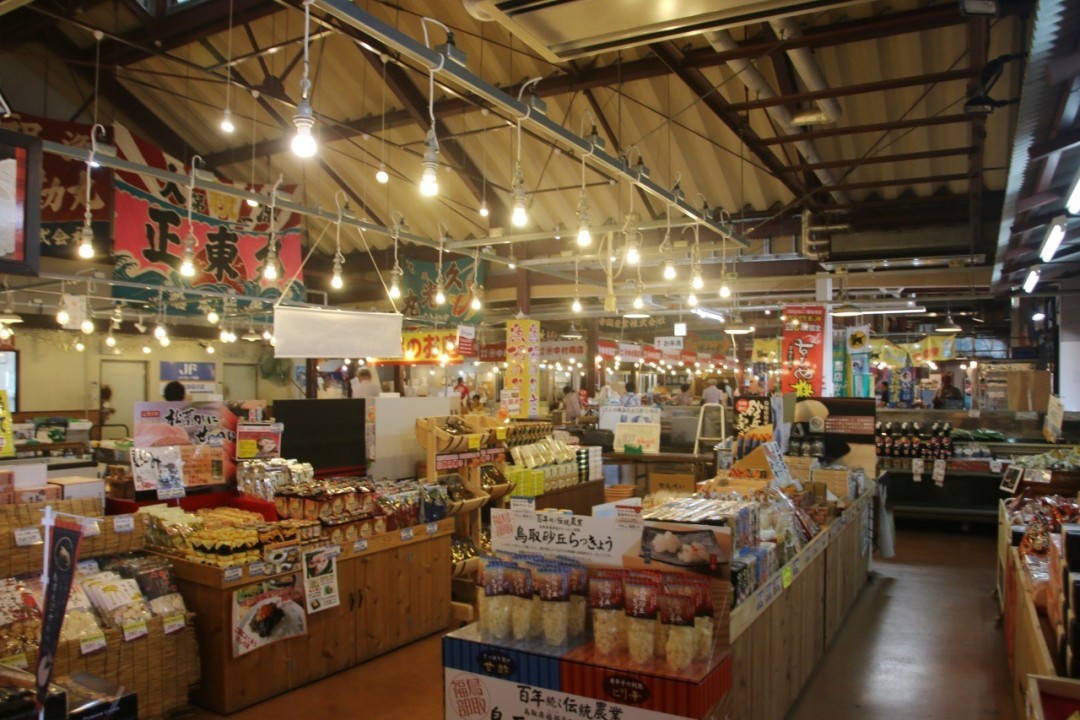
Fresh seafood caught at the port, along with local farm produce and souvenirs, is available.
Visitors can buy fresh fish and either take it home or bring it to a restaurant for immediate preparation.
Seasonal Seafood Highlights
Spring: abalone, horse mackerel, turban shell
Summer: white squid, rock oysters (Natsuki), tuna
Autumn: sandfish, mackerel, blackthroat seaperch
Winter: Matsuba crab, “moza-ebi” shrimp, flounder
The Tottori Port Karo Seafood Market offers fresh catches brought in directly from Karo Port, just two minutes away. It also serves as a local produce market and a place to buy regional specialties. The market has two areas—shops and restaurants. You can pick out fresh seafood from the shop area and either take it home or have it cooked on the spot at one of the restaurants.
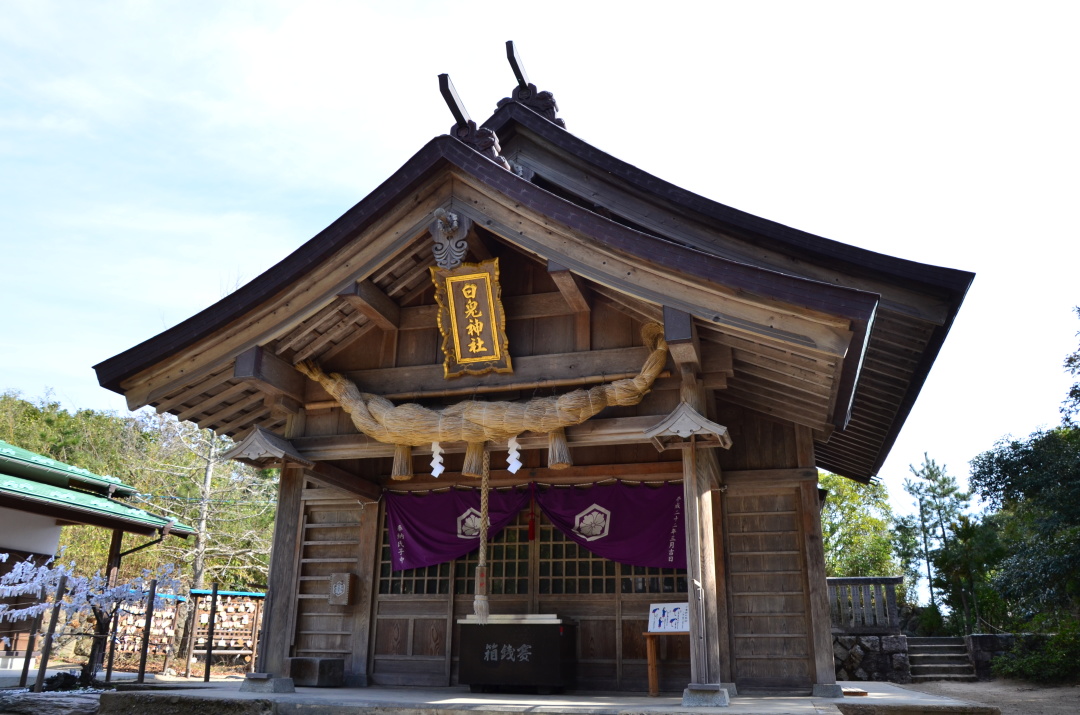
A historic shrine appearing in Japan’s ancient texts Kojiki and Nihon Shoki.
Famous for the myth “The White Hare of Inaba,” it is believed to offer blessings for healing burns and skin ailments, as well as matchmaking—since it helped unite Ōkuninushi and Princess Yakami.
Designated as Japan’s first “Lover’s Sanctuary.”
According to legend, a white rabbit that was saved transformed into a matchmaker to repay the kindness, bringing together the god Ōkuninushi and the beautiful princess Yakami-hime.
Shirohato Shrine offers various charms, omikuji (fortune slips), and goshuin (temple stamps).
It is said that placing the “Enmusubi Stones,” a set of five stones, on the torii gate or on the white rabbit statue can help make your wishes come true.
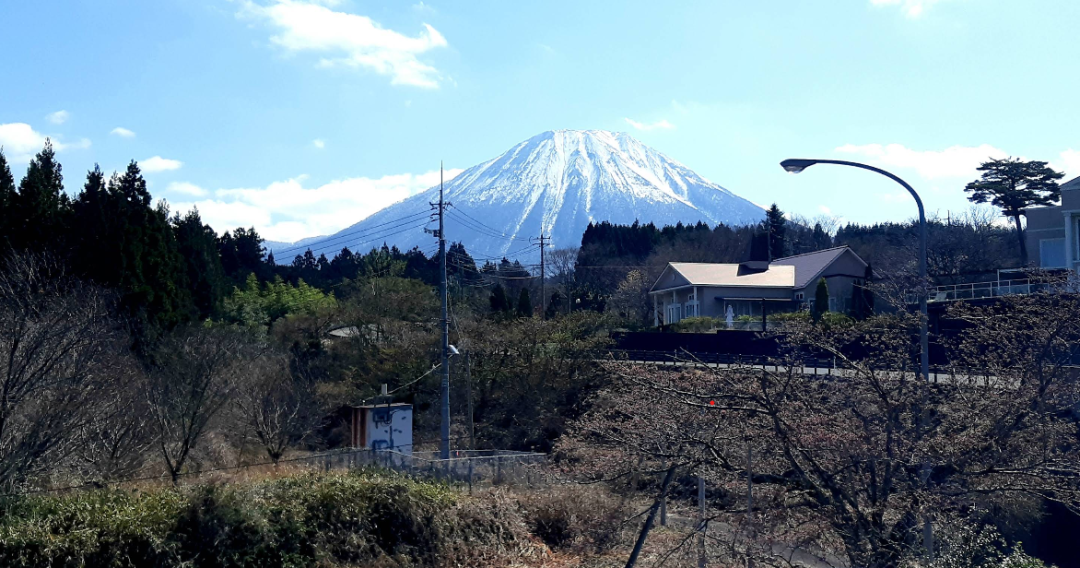
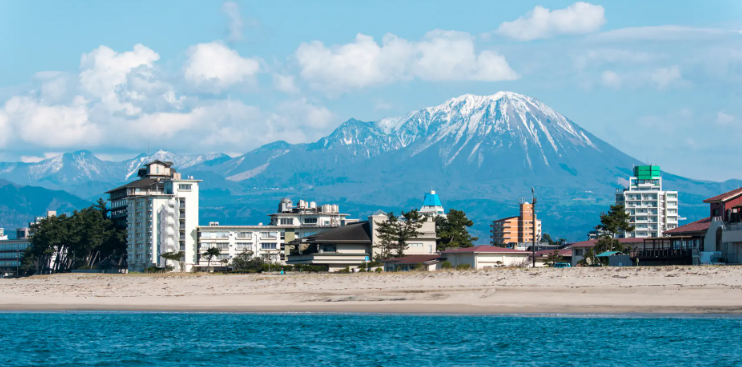
Yonago City, located in western Tottori Prefecture, is a scenic area surrounded by the Sea of Japan to the front and the beautiful inland Nakaumi Lake, with Mount Daisen—one of Japan’s oldest sacred mountains—just behind. From this observatory, you can enjoy stunning views of Mount Daisen with the Sea of Japan in the background, experiencing the unique feeling of being embraced by both mountains and sea.
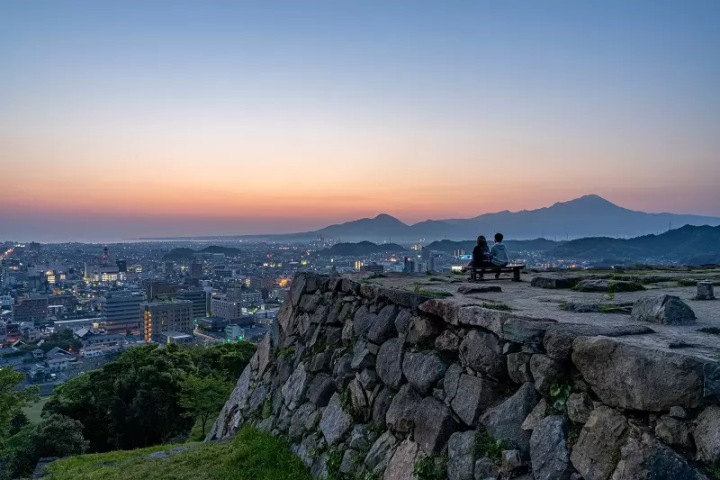
Once one of the most famous castles in the San’in region, Yonago Castle had four- and five-story tenshu (main keeps). it’s one of Yonago’s best viewpoints, offering 360-degree views of the city, the Sea of Japan to the north, the bright blue Nakaumi Lake to the west, and Mount Daisen’s graceful ridgeline to the east.
Follow the mountain path from Minato-yama Park and climb the stone steps to the summit, about 90 meters above sea level. It usually takes around 15–20 minutes to reach the top. Once there, you’ll be treated to a full 360-degree view with nothing blocking your sight—you can see Mount Daisen, the Sea of Japan, the Kaike Onsen coastline, and all of Yonago City. The views are especially stunning in the early morning and at sunset.
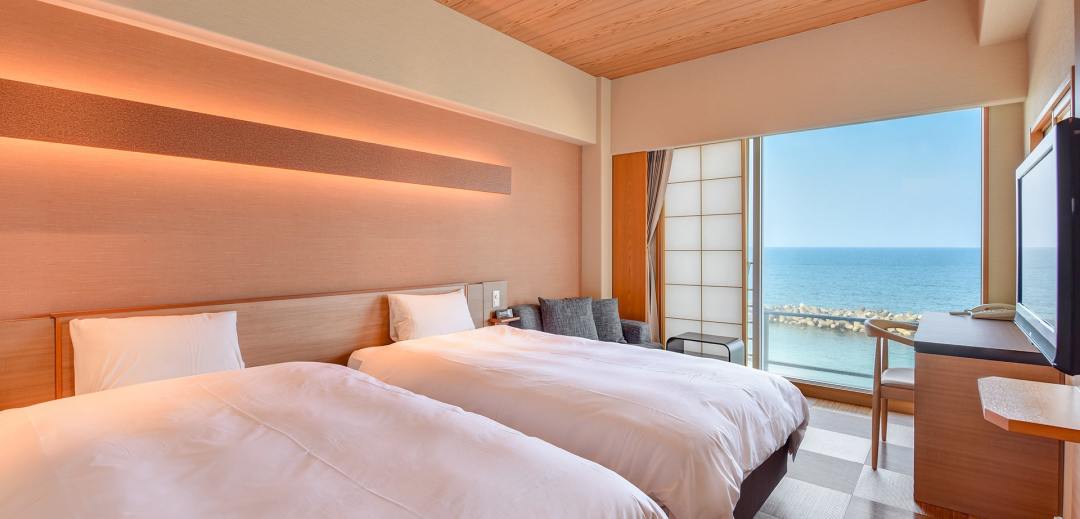
Kaike Onsen Hotel or similar
Bayside Square Kaike Hotel or similar
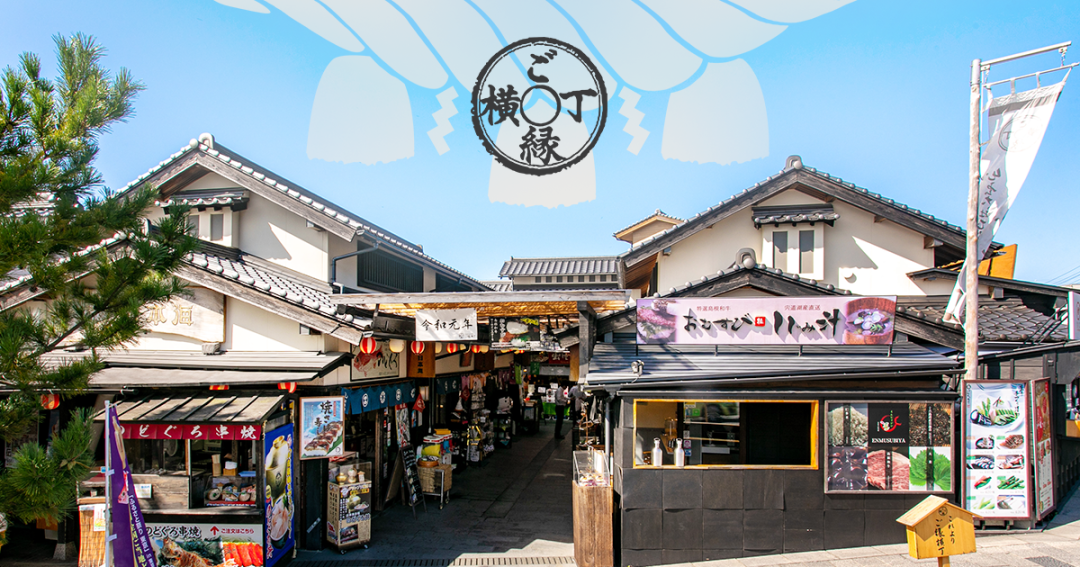
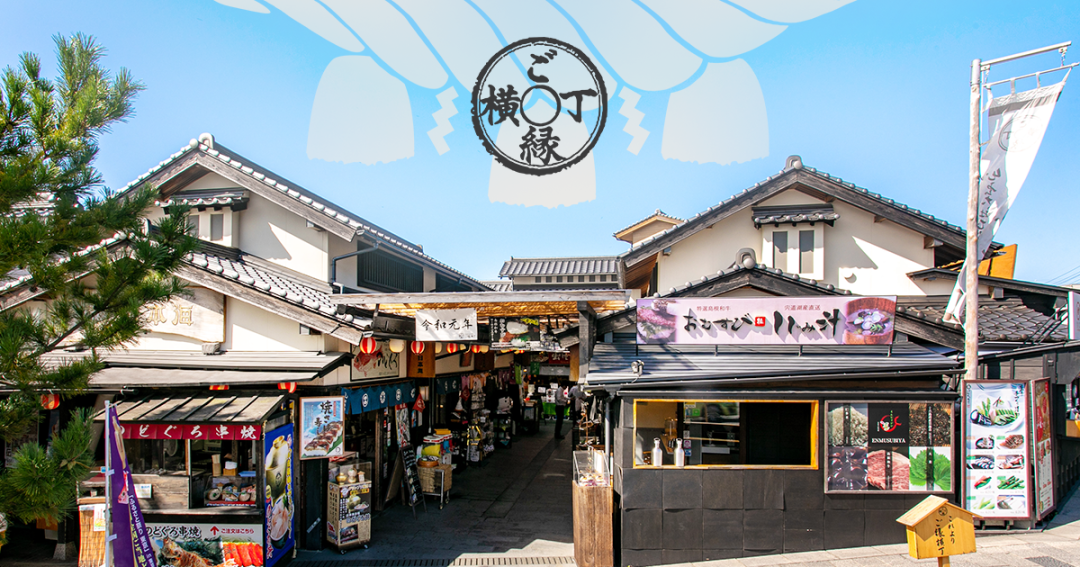
Located just in front of Izumo Taisha, Goen Yokocho is a charming shopping street that once declined due to changes in transportation routes. After the 2013 Heisei Grand Sengu (major shrine reconstruction) sparked a surge in visitors, the area was revitalized and redeveloped into a lively promenade filled with local food, handmade crafts, and souvenirs.
Here you can enjoy regional specialties such as Izumo soba, nodoguro seafood rice bowls, Ginyama red chicken karaage, and Izumo zenzai mochi. The street also offers myth-inspired souvenirs like magatama charms and “en-musubi” (matchmaking) rabbit goods.
After visiting the shrine, strolling through Goen Yokocho is a perfect way to experience local flavors and pick up meaningful souvenirs—an enjoyable stop that satisfies both your taste buds and your memories of Izumo.
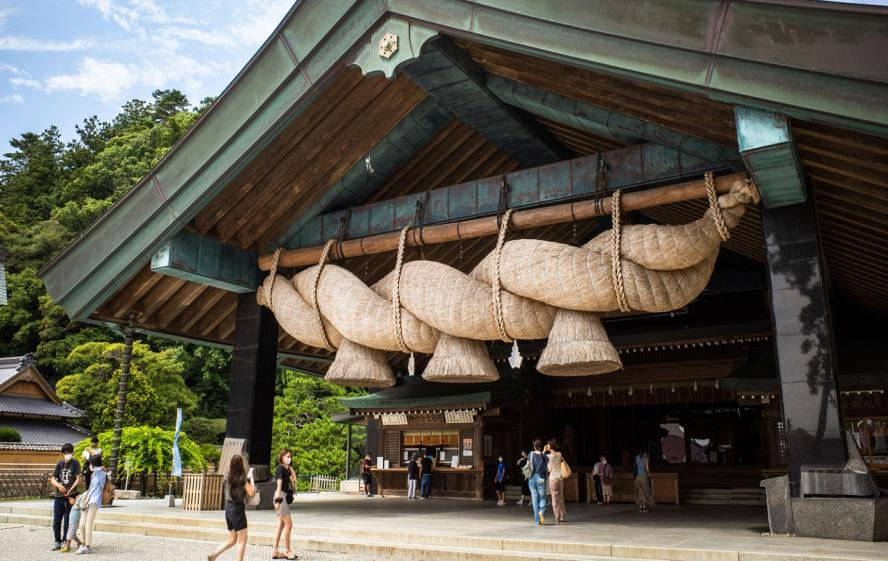
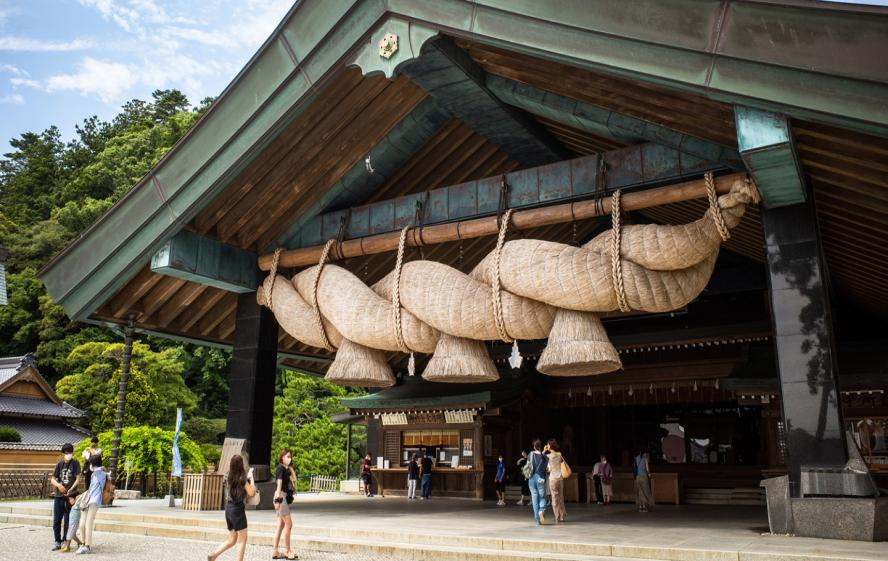
Izumo Taisha is located in Izumo City, Shimane Prefecture, and is considered one of the oldest and most important Shinto shrines in Japan. It is widely known throughout the country as the shrine of “en-musubi,” the deity of relationships and connections. The main deity enshrined here is Ōkuninushi no Ōkami, who is believed to govern good relationships, harmony among people, family happiness, and prosperity in business.
Izumo Taisha is especially famous for its connection to “en-musubi.” This concept goes beyond romantic relationships and also includes interpersonal connections, career opportunities, and all kinds of positive bonds in life.
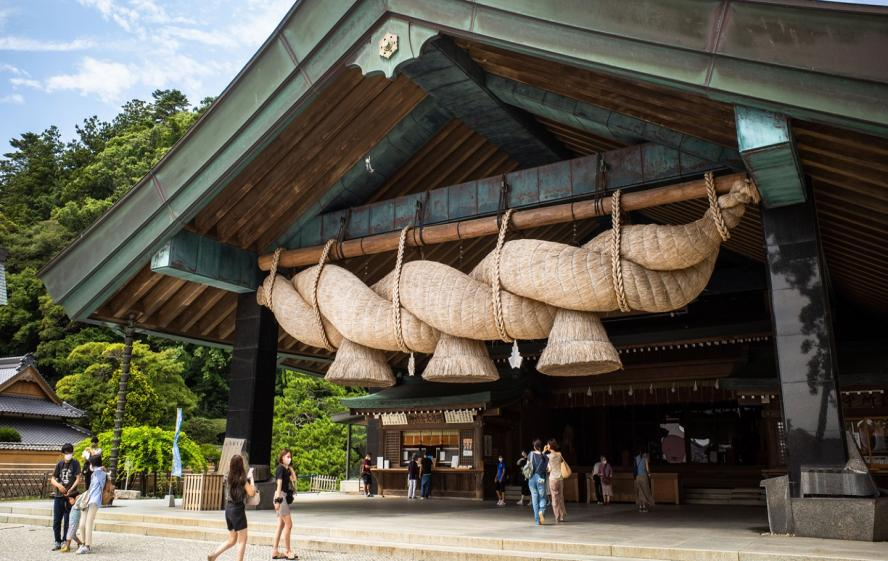
Walking through the shrine grounds allows visitors to experience the solemn and sacred atmosphere of one of Japan’s most ancient shrines. In front of the Kaguraden Hall hangs one of the largest sacred shimenawa ropes in Japan, and the traditional worship style here follows “two bows, four claps, and one bow.” The legend of “Kamiari-zuki” (the month when the gods gather in Izumo) further enriches the shrine’s mythological significance. Combining history, culture, and faith, this sacred site is an essential destination for prayer, blessing, and cultural experience.
If you wish to enter the hot spring bath, bringing a swimsuit is recommended. Bathrobes can also be rented at the tourist information center.
Yubara Onsen is located in Maniwa City, Okayama Prefecture. Around the hot spring town, visitors may notice references to the Japanese giant salamander, the largest amphibian in Japan. Locally it is often regarded as a symbol of good fortune and protection, and within the town you can find small shrines or statues dedicated to this creature, reflecting its role as a cultural guardian of the area.
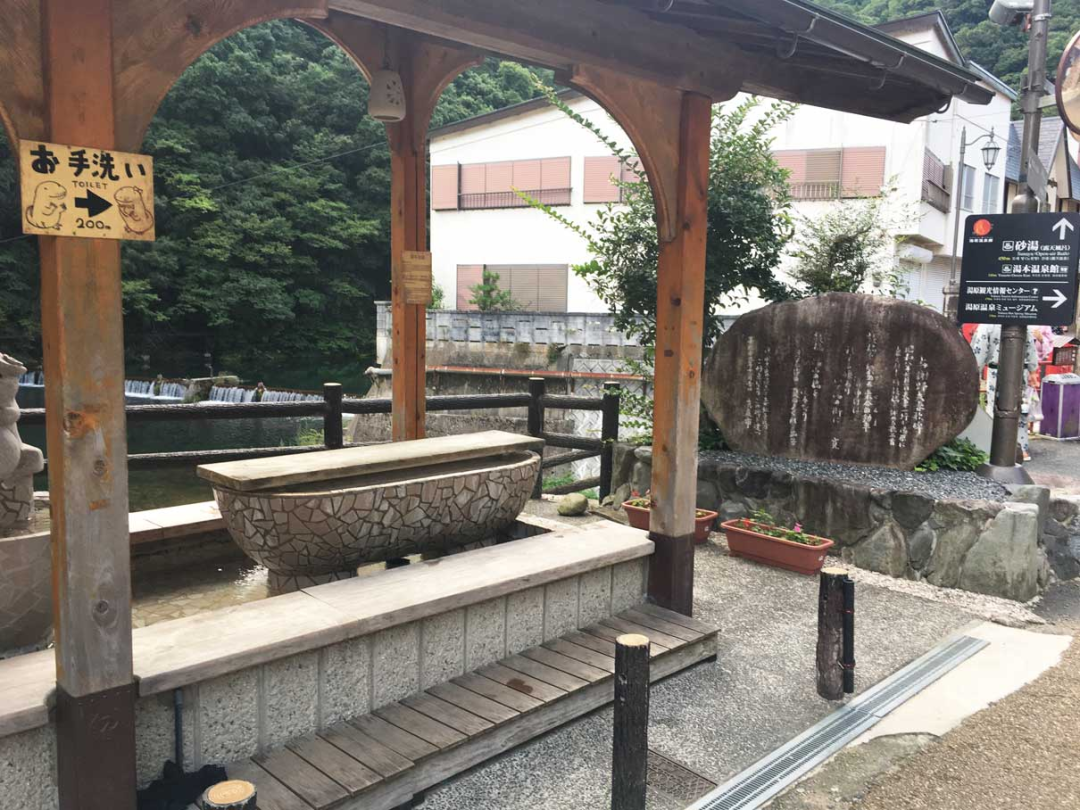
One of the highlights here is Sunayu, an open-air hot spring that naturally emerges from the sand and gravel along the riverbed. The hot spring of Yubara was formed by geothermal activity related to nearby volcanic formations such as Mount Daisen and the Hiruzen volcanic area. The estimated spring output reaches about 6,000 liters per minute, making it a remarkably abundant natural source. The water is an alkaline simple hot spring, known for its smooth and gentle feeling on the skin. It is clear, colorless, and odorless.
Even if you choose not to enter the bath, you can still relax in the foot baths along the street, while enjoying local snacks and sweets from the onsen town. It is a pleasant way to experience the relaxing atmosphere and leisurely pace of this traditional hot spring destination.
Yubara Onsen → Osaka (Approx. 2 hours 30 minutes by car)
Pricing
【Included in the fee】
1)Vehicle service fees as listed in the itinerary
2)Fuel, tolls, and highway charges
3)Vehicle service time: within 10 hours (as required by Japanese law)
4)Driver-guide service fee (does not accompany into attractions)
5)Vehicle type reference: 7-seater minivan, Alphard, or HiAce. Actual vehicle will be adjusted according to the number of participants on the day
6) Shimenawa rope–making experience fee
7) Accommodation: 1 night with breakfast (2 guests per room)
【Not included in the fee】
1)Any items not mentioned in the “Included in the Fee” section
2)Meals, optional activities at the destination, and other personal expenses
3)Insurance fees (as personal information is required, we recommend purchasing your own insurance; website: ~~~)
4) Admission to the Sand Museum is not included.
Important Notes
I. Reservation and Participation
• Schedule changes are not allowed after the reservation is confirmed. Any losses incurred due to changes shall be borne by the customer.
• Please provide accurate full name and contact information, and complete payment within the specified deadline.
• Please manage your valuables personally. We are not responsible for any loss or damage.
• Late arrival after departure, no-show without prior notice, or leaving the group midway will be considered a voluntary forfeiture, and no refund will be provided.
II. Participation Requirements
• Participants under 18 years of age must be accompanied by a guardian.
• Participants aged 70 or above are advised to assess their health condition and are recommended to be accompanied by a family member or friend aged 20 or above.
• Pregnant individuals, persons with heart conditions, hypertension, acrophobia, or other chronic illnesses are advised to refrain from participating in high-risk activities (e.g., skiing, water sports, etc.).
• The tour will be conducted in Chinese and Japanese. If other languages are required, please inquire in advance.
• If there are any changes in health condition after application, please notify us promptly.
III. Itinerary and Safety
• This is a group tour with shared transportation. Please follow the instructions of the guide/driver and strictly adhere to meeting times. No refund will be provided for any part of the itinerary missed due to lateness.
• The order of visits may be adjusted due to weather, traffic, events, etc., but no attractions will be omitted.
• Outdoor activities involve certain risks. Please participate according to your physical condition and follow on-site safety instructions.
• Safety and conduct during free time are the sole responsibility of the customer.
IV. Cancellation and Refund Policy (Cancellation Fees)
Tour Type Cancellation Period (Before Departure) Cancellation Fee
Multi-day Tour 10–20 days (inclusive) 20% of the tour fee
Day Tour 10–8 days (inclusive) 20% of the tour fee
All Tours 7–2 days (inclusive) 30% of the tour fee
All Tours 1 day before departure 40% of the tour fee
All Tours Day of departure (with notice) 50% of the tour fee
All Tours Day of departure (without notice) 100% of the tour fee
V. Other Important Notes
• Please wear comfortable clothing and shoes. Sunscreen and insect repellent are recommended.
• Meal contents vary by product. Please inform us in advance of any allergies or religious dietary restrictions.
• Shopping decisions are at your discretion. Be sure to obtain receipts.
• Please maintain contactable status during the tour.
• Respect local laws, customs, and culture, and observe public etiquette.
VI. Insurance and Liability
• We strongly recommend that customers purchase travel accident insurance independently.
• Upon request, we can introduce partner insurance companies.
• We are only liable for damages caused by our own negligence. Damages resulting from natural disasters or other force majeure events are not covered.
VII. Other Terms and Conditions
For further details, please refer to the "Tour Terms and Conditions & Transaction Terms Explanation." Checking the relevant box during online reservation is deemed as confirmation of the content and agreement to receive the document electronically.
